
Vinyl Privacy Fence Installation Made Easy – No Peeking Allowed!

Why Vinyl Privacy Fence Installation is the Smart Choice for Massachusetts Homeowners
Vinyl privacy fence installation involves setting posts in concrete, assembling interlocking panels, and securing rails to create a durable barrier that lasts 20-30 years with minimal maintenance. Here’s what you need to know:
Quick Installation Overview: 1. Planning – Mark property lines, call 811 for utilities, obtain permits 2. Layout – Set stakes and string lines, mark post locations 3. Digging – Create 10″ diameter holes, 1/3 the post height deep 4. Setting Posts – Add 6″ gravel base, set posts plumb, fill with concrete 5. Panel Assembly – Install bottom rails, snap in fence panels, attach top rails 6. Finishing – Add post caps, install gates, clean up site
Professional Installation Time: 2-3 days for most residential projects
If you’ve been putting off that backyard privacy project because wood fencing seems like too much work, you’re not alone. Many Massachusetts homeowners are finding that vinyl offers the perfect solution – no painting, no staining, no rotting boards to replace.
Unlike traditional wood fences that require constant upkeep, vinyl privacy fences are engineered to withstand New England’s harsh winters and humid summers. The material is five times stronger than wood and requires 60% less maintenance over its lifetime.
Whether you’re looking to create a quiet retreat from busy neighborhood streets or simply want to keep prying eyes away from your family gatherings, a properly installed vinyl privacy fence delivers decades of reliable performance.

Why Choose a Vinyl Privacy Fence?
When you’re standing in your backyard, dreaming of a private oasis where you can relax without worrying about neighbors peeking over, vinyl privacy fence installation offers the perfect solution. Made from durable PVC, vinyl fencing has become the go-to choice for Massachusetts homeowners who want beautiful results without the endless maintenance headaches.
Think about it – when was the last time you wanted to spend your weekend staining a fence? With vinyl, those days are over. The material naturally fights off everything New England weather throws at it: rot, insects, ice storms, and those sweltering summer days that make wood warp and crack.
Vinyl’s secret weapon is its flexibility. While other materials get brittle in our harsh freeze-thaw cycles, vinyl actually expands and contracts gracefully. Modern vinyl formulations include UV inhibitors that prevent fading, so your fence looks fresh years after installation. Research consistently shows that vinyl fences last 20-30 years with minimal care – that’s decades of privacy without the constant upkeep.
If you live near a busy street or have particularly chatty neighbors, you’ll love vinyl’s noise-reduction properties. Those solid privacy panels create an effective sound barrier that makes your outdoor space feel like a peaceful retreat.
Material | Lifespan | Annual Maintenance | Major Repairs |
|---|---|---|---|
Vinyl | 20-30 years | Light washing only | Rare panel replacement |
Wood | 10-15 years | Staining every 2-3 years | Board replacement, rot repair |
Metal | 15-20 years | Rust treatment, painting | Welding, corrosion repair |
Top Styles & Colors at a Glance
Modern vinyl fencing has come a long way from the basic white picket fences of the past. Today’s options let you create exactly the look you want for your property.
Tongue-and-groove panels remain the most popular choice for complete privacy – these interlocking boards leave no gaps for prying eyes. If you want privacy but still need airflow, lattice-top designs give you solid coverage below with decorative openwork above that lets breezes through.
Color-wise, you’re not stuck with boring white anymore. Classic white still looks crisp and clean against any home style, but warm tan and beige tones blend beautifully with natural landscaping. Contemporary gray has become incredibly popular with modern homes, while wood-grain finishes give you that natural wood texture without any of the maintenance headaches.
Benefits Over Wood & Metal
Here’s where vinyl really shines compared to traditional materials. While wood fences demand staining or painting every few years, vinyl needs nothing more than an annual wash with soap and water. No scraping, no priming, no weekend projects that eat up your free time.
Vinyl is up to five times stronger than wood and completely termite-proof. You’ll never worry about finding a section that’s been quietly eaten away or rotted from the inside out. Unlike metal fencing that can rust or require welding repairs, vinyl maintains its structural integrity year after year.
The math is pretty compelling too. While vinyl costs more upfront, it requires 60% less maintenance over its lifetime compared to wood. When you factor in all those cans of stain, brushes, and weekend hours you’ll save, vinyl typically pays for itself within the first decade.
Most importantly, vinyl won’t splinter (great news if you have kids or pets), won’t warp in humidity, and won’t crack from temperature changes. It’s the kind of set-it-and-forget-it solution that lets you actually enjoy your backyard instead of constantly maintaining it.
For more information about local requirements before starting your project, check out our guide on permits and regulations.
Pre-Installation Checklist: Permits, Property Lines & More
Getting your vinyl privacy fence installation off to the right start means doing your homework first. Spending a few extra days on preparation can save you weeks of headaches later.
The most important call you’ll make isn’t to your contractor – it’s to Call 811. This free utility marking service needs at least 72 hours notice before any digging begins. Underground gas, electric, water, and cable lines are everywhere, and hitting one during installation can turn your fence project into an expensive emergency.
Property lines are another area where assumptions can get expensive fast. If you’re not 100% certain where your boundaries are, now’s the time to dig out that property survey or hire a professional surveyor. Installing even a few inches onto your neighbor’s property can mean tearing down and rebuilding your entire fence.
Massachusetts zoning codes typically limit fence heights to 4 feet in front yards and 6 feet in backyards, but every community has its own quirks. Some towns get picky about materials or styles, especially in historic districts. A quick call to your local building department can clarify what’s allowed in your area.
Don’t forget about HOA rules if you live in a neighborhood association. Many require pre-approval for fence installations, and some have surprisingly specific requirements about colors or styles. More info about permits and codes can help you steer these local requirements without any surprises.
Easements for utilities or drainage can also throw a wrench in your plans. These areas might look like your property, but you may not have the right to build there. Check your property deed or ask your surveyor to identify any easements that could affect your fence placement.
In Massachusetts, posts must be set below the frost line – typically 36 inches deep – to prevent winter frost from pushing them out of alignment. This depth requirement affects both labor time and concrete needs for your project.
Site Measurement & Material Take-Off
Getting accurate measurements isn’t just about ordering the right amount of materials – it’s about avoiding the frustration of running short halfway through installation or having piles of expensive leftover panels cluttering your yard.
We start by measuring the total linear footage along your planned fence line, then divide by your chosen panel width. Most vinyl panels come in 6 or 8-foot widths, so the math is usually straightforward. We always recommend adding 10% extra to account for cuts around obstacles and the occasional damaged panel.
Post requirements depend on their job. Corner and end posts handle the most stress, so they need to be hefty 5″ x 5″ posts. Standard line posts can be 4″ x 4″ since they’re just supporting panels between stronger posts. Gate posts get the 5″ x 5″ treatment too, since they’ll be handling the weight and movement of swinging gates day after day.
For concrete and gravel quantities, plan on 1-2 bags of 80-pound quick-set concrete per post, depending on soil conditions. Each hole also needs about 6 inches of gravel at the bottom for drainage.
Vinyl Privacy Fence Installation: Step-By-Step Overview
The magic of vinyl privacy fence installation happens through a carefully choreographed process that transforms your backyard in just 2-3 days. Think of it like assembling a giant puzzle – each piece has its perfect place, and when done right, everything clicks together beautifully.

What makes modern vinyl fencing so appealing is its modular design. Panels literally snap into place between posts, much like oversized building blocks. This isn’t your grandfather’s fence installation with hammers and nails – it’s engineered precision that creates strong, weather-resistant connections.
The process follows a logical sequence where each step builds on the previous one. Get the layout right, and everything else flows smoothly. Rush the concrete cure time, and you’ll be dealing with wobbly posts later. The key is patience and attention to detail at each phase.
Planning & Laying Out for Vinyl Privacy Fence Installation
Before any digging begins, we turn your property into a temporary construction site marked with stakes and string lines. This careful planning stage prevents costly mistakes down the line.
The corner posts go in first – these anchor points determine everything that follows. We install temporary stakes at each corner and end point, then connect them with mason’s line to create a visual guide for the entire fence path.
Marking each post location along the string requires precision measuring. Standard panel widths mean posts must be spaced exactly right – even a few inches off throws everything out of alignment. We use the old carpenter’s trick of the 3-4-5 triangle method to ensure corners are perfectly square.
When dealing with sloped terrain, we have two main approaches. Stepping creates a stair-step appearance where level panels follow the slope in sections – perfect for steeper grades. Racking angles the panels to follow ground contours smoothly, which works beautifully on gentle slopes under 6 inches per panel section.
Setting Posts Correctly for Vinyl Privacy Fence Installation
Here’s where the real work begins – and where vinyl privacy fence installation success is truly determined. Posts are the backbone of your entire fence system, so we take no shortcuts on this critical phase.
Those 10-inch diameter holes might seem oversized for a 4-inch post, but there’s engineering behind the math. The three-times-post-width rule ensures adequate concrete coverage for maximum stability. For a 6-foot fence, we dig 30 inches deep – that’s 24 inches of post depth plus 6 inches for the crucial gravel base.
The 6-inch gravel foundation at the bottom of each hole serves as both drainage system and stable platform. Without this gravel base, water can pool around posts, and freeze-thaw cycles will eventually shift your fence.
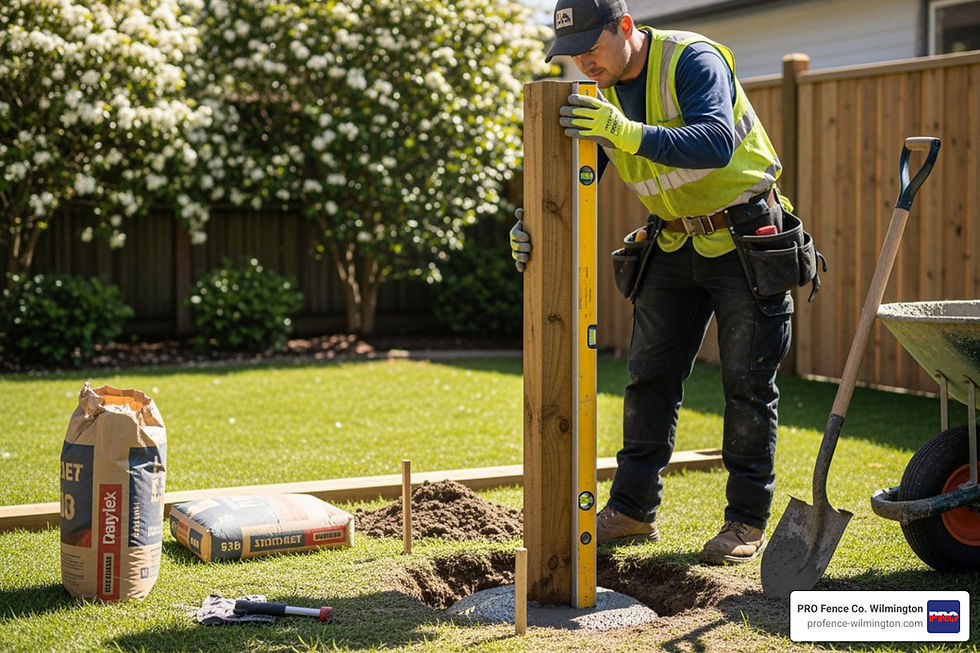
Setting posts plumb requires patience and a good level. We check two adjacent sides of each post to ensure perfect vertical alignment. Quick-set concrete simplifies the mixing process – just add water directly in the hole and let chemistry do the work.
The 24-48 hour cure time tests everyone’s patience, but rushing this step ruins everything that follows. Concrete needs time to reach full strength, and attaching panels too early can shift posts out of alignment.
Assembling Panels & Rails
Once posts are solid, the fun part begins. Modern vinyl systems use pocket-rail design that makes panel installation surprisingly straightforward. The bottom rail slides into pre-routed channels in the posts, creating a secure foundation for the fence panels.
Tongue-and-groove boards slide into the bottom rail channel one by one, building your privacy screen board by board. The top rail locks everything together, creating a solid panel that can withstand decades of New England weather.
That 1/4-inch expansion gap between panels might seem like a mistake, but it’s actually crucial engineering. Vinyl expands and contracts with temperature changes, and without this small gap, panels can buckle during hot summer days.
Post caps get glued in place to prevent water entry and add a finished appearance. These aren’t just decorative – they’re your first line of defense against moisture damage that could compromise post integrity over time.
Installing Gates & Hardware
Gates present unique challenges because they experience much more stress than stationary fence sections. Every time someone opens and closes a gate, forces transfer through the hinges to the gate posts. That’s why gate posts need reinforcement with internal steel cores or aluminum I-beams.
We dig gate post holes 6 inches deeper than line posts and often use additional concrete for extra stability. The reinforcement inserts slide inside hollow vinyl posts and get secured with self-tapping screws – invisible strength that prevents sagging over time.
Heavy-duty hinges mount first, and getting them perfectly level prevents binding and premature wear. The gate hangs next, and we check for proper swing clearance.
Latch installation requires precise measurements with 5/8-inch gaps on each side of the gate opening. Too tight and the gate won’t close properly; too loose and it rattles in the wind. For pool areas, self-closing spring hinges ensure code compliance and safety.
Working on Slopes & Uneven Ground
Sloped installations separate experienced installers from weekend warriors. The key is choosing the right technique for your specific terrain and aesthetic preferences.

Stepping works best for slopes greater than 6 inches per panel section. Each panel stays level while following the slope in geometric steps. The result is clean and professional, though you might get small triangular gaps at ground level that need landscaping attention.
Racking creates smoother visual flow on gentler slopes. Panels angle to follow ground contours naturally, but this technique requires either special rackable panels or custom cutting.
Ground clearance stays consistent at 1-2 inches between panel bottom and soil. This prevents warping from ground contact and allows proper drainage.
Common Mistakes to Avoid
Even with careful planning, certain mistakes can turn a smooth installation into an expensive lesson. The biggest danger is skipping the 811 utility marking call. Hitting a gas line isn’t just costly – it’s potentially deadly. That free service exists for good reasons.
Property line disputes create expensive headaches when fences end up on neighbors’ land. Wrong post spacing is another common error – measure twice, dig once, because moving concrete-set posts is no fun.
The gravel base might seem like an unnecessary step, but skipping those 6 inches of drainage leads to settling and eventual fence failure. Misaligned posts create panel installation nightmares and structural weakness that compounds over time.
Zero expansion gaps between panels cause buckling during hot weather – vinyl needs room to breathe. Under-cured concrete from impatience leads to loose posts and wobbly fences that require expensive repairs.
Cost, Maintenance & Longevity
Let’s talk numbers – because we know that’s what you’re really wondering about. Vinyl privacy fence installation represents a significant investment, but one that pays dividends for decades to come.
Based on internet research across the country, you can expect to see prices ranging from $15 to $40 per linear foot for standard vinyl privacy fencing, though premium options with wood-grain textures can run anywhere from $25 to $75 per linear foot. Gates typically add $200 to $800 to your project, depending on size and hardware choices.
These are average costs based on internet data and not actual costs for PRO Fence Co. Wilmington. Your actual investment will depend on your specific site conditions, material selections, and local factors.

Here’s where vinyl really shines: longevity. While wood fencing typically lasts 10 to 15 years with regular maintenance, your vinyl fence will easily serve your family for 20 to 30 years with minimal care. That’s potentially watching your kids grow up, graduate, and bring their own children over to play in your private backyard oasis.
The maintenance story is even better. Your annual fence care routine consists of one simple task: washing it down with soap and water. No scraping, no staining, no replacing rotted boards. The UV inhibitors built into modern vinyl formulations mean your fence will look virtually the same in year 15 as it did on installation day.
Most homeowners spend less than $50 per year on vinyl fence maintenance, compared to hundreds of dollars annually for wood fence upkeep. Over two decades, that difference alone often pays for the higher initial investment.
Allowing for Expansion & Contraction
Here’s something many homeowners don’t realize: vinyl fencing actually “breathes” with the seasons. Like most materials, vinyl expands when it’s hot and contracts when it’s cold – and that’s perfectly normal.
The secret to long-lasting vinyl privacy fence installation lies in accommodating this natural movement. We always leave a quarter-inch gap between panels during installation. This small space gives your fence room to expand during those sweltering July afternoons without buckling or warping.
Spring and fall offer ideal installation conditions because temperatures are moderate. When we install your fence during these mild periods, the material is in its “neutral” state, making it easier to achieve proper spacing that works year-round.
Repairing & Replacing Sections
One of vinyl’s smartest features is its modular design. Unlike wood fencing where damage often means replacing entire sections, vinyl components can be swapped out individually. Think of it like replacing a single puzzle piece rather than rebuilding the entire puzzle.
Cracked panels from storm damage or accidents can be removed and replaced without affecting neighboring sections. Loose posts can be stabilized with additional concrete or post sleeves. Even gate hardware that wears out over time is easily replaceable with standard tools.
Most manufacturers maintain consistent color formulations for years, so replacement parts blend seamlessly with your existing fence. Based on internet averages, panel replacements typically run $50 to $150, while post repairs range from $75 to $200 – a fraction of full fence replacement costs.
For detailed guidance on keeping your fence in top condition, more info about fence upkeep covers everything from seasonal inspections to minor repairs.

The bottom line? Vinyl privacy fence installation isn’t just about immediate gratification – it’s about making a smart long-term investment in your property and your family’s enjoyment of your outdoor space.
Frequently Asked Questions about Vinyl Privacy Fence Installation
When homeowners in Massachusetts are considering vinyl privacy fence installation, they often have similar concerns about the process. Here are the three questions we hear most often, along with honest answers based on our years of experience.
Do I really need concrete around vinyl fence posts?
This is probably the most common question we get, and the answer is a definitive yes. While some DIY guides might suggest alternatives, skipping concrete is one of the biggest mistakes you can make with vinyl privacy fence installation.
Here’s the reality: even though vinyl posts are lighter than wood, they still face significant wind loads and ground movement. Massachusetts experiences freeze-thaw cycles that can shift posts over time, and without concrete anchoring, your fence will eventually fail.
Quick-set concrete is the professional standard because it provides immediate stability during installation and eliminates guesswork. You don’t need to mix ratios or measure water – just pour the dry concrete around the post and add water. It cures quickly, allowing us to complete your project faster while creating a permanent foundation.
According to fence installation best practices, proper concrete anchoring is essential for long-term fence stability. We’ve seen too many fences installed without concrete that started leaning within a few years. The small additional cost of concrete prevents expensive repairs and ensures your fence will look great for decades.
Can a vinyl privacy fence be installed on a steep slope?
Absolutely! One of vinyl’s advantages is how well it adapts to challenging terrain. We install vinyl privacy fence installation projects on slopes regularly throughout Middlesex and Essex Counties, and the results can be stunning.
The technique depends on how steep your slope is. For gentle slopes up to 6 inches per panel section, we use a racking method where panels angle to follow your ground’s natural contour. This creates a smooth, flowing appearance that looks completely natural.
For steeper slopes over 6 inches per panel, we recommend stepping, where each panel stays level but steps down the hillside. This maintains consistent panel height and gives you better structural integrity on challenging grades.
How long before I can use my new gate after installation?
This question usually comes up when families are eager to start enjoying their new privacy, especially if the gate provides access to a pool area or main entrance to the backyard.
The honest answer is 24-48 hours for regular use, even though quick-set concrete reaches initial strength in about 30 minutes. We know it’s tempting to test that new gate right away, but patience here prevents problems later.
During the concrete cure period, the gate can be opened and closed carefully if you need emergency access. Just avoid slamming it or putting stress on the hardware while the concrete is still gaining full strength.
Conclusion
When you’re ready to transform your backyard into a private sanctuary, vinyl privacy fence installation delivers everything Massachusetts homeowners are looking for. You get decades of reliable performance without the endless cycle of staining, painting, and board replacement that comes with traditional wood fencing.
The numbers speak for themselves – vinyl fences last 20-30 years with minimal maintenance while providing superior durability and weather resistance. That’s real value that shows up in both your daily life and your property’s resale value.
At PRO Fence Co. Wilmington, we’ve built our reputation on understanding exactly what New England homeowners need from their fencing investmvinyl fence
ent. Our family-owned team brings decades of hands-on experience to every project, which means we know how to handle everything from rocky soil conditions to strict HOA requirements.
We’re not just another fence company – we’re your neighbors. We live and work in the same communities we serve throughout Middlesex and Essex Counties, including Wilmington, Reading, North Andover, Salem, Wakefield, Andover, Woburn, Chelmsford, Lynn, Peabody, and Beverly. That local connection means we understand your specific challenges and take personal pride in every fence we install.
From helping you steer permit requirements to ensuring your fence looks perfect for years to come, we handle every detail with the quality craftsmanship that comes from being locally owned and operated. No rushing through jobs to get to the next town – your project gets our full attention from start to finish.
Your backyard should be your retreat, not your weekend maintenance project. With professional vinyl privacy fence installation, you can finally have the private outdoor space you’ve been dreaming about.
Request an expert estimate today – PRO Fence Co. Wilmington is ready to give your yard the privacy it deserves!

Comments