
How to Rack Up a Perfect Aluminum Fence on Your Sloped Yard
- Pro Fence Wilmington

- Aug 4, 2025
- 14 min read
Why Installing Aluminum Fence on a Slope Requires the Right Approach
How to install aluminum fence on a slope depends on your yard’s grade and the look you want to achieve. The good news? Aluminum fencing is perfectly suited for sloped terrain, offering two proven installation methods that work with – not against – your landscape.
Quick Answer: Two Methods for Sloped Aluminum Fence Installation
Racking Method – Panels angle with the slope, creating a smooth flowing top line
Best for: Gentle to moderate slopes (up to 6-20 inches rise per panel)
Result: Continuous fence line that follows ground contour
Stepping Method – Panels installed level in a stair-step pattern
Best for: Steep slopes or decorative fence styles
Result: Level top rail with structured, tiered appearance
As one fence professional noted: “Ground is usually not level, even when it appears to be.” This reality makes choosing the right installation method crucial for both aesthetics and structural integrity.
Unlike solid materials that require complex modifications, aluminum fence panels are engineered to handle slopes naturally. Standard panels can accommodate modest inclines, while specially designed rackable panels can handle rises up to 36 inches per section.
The key factors that determine your installation approach include:
Slope severity (measured as rise over run)
Fence style (some decorative panels don’t rack well)
Aesthetic preference (flowing vs. structured appearance)
Security needs (gap management considerations)

Key terms for how to install aluminum fence on a slope:
Planning Your Sloped Fence Installation
How to install aluminum fence on a slope starts long before the first post goes in the ground. Think of this phase as laying the foundation for success – because a well-planned fence installation saves time, money, and headaches down the road.

Measuring the Slope: The “Rise Over Run” Secret
The heart of slope planning lies in understanding your terrain’s personality. We use the “rise over run” calculation – a straightforward method that tells us exactly what we’re working with.
Here’s how it works: Place a straight board (typically 6 or 8 feet long) along your planned fence line. Use a level to make the board perfectly horizontal, then measure the gap between the ground and the board’s lower end. That gap is your “rise,” and the board’s length is your “run.”
If that 6-foot board needs to be lifted 12 inches on one end to stay level, you’ve got a 12-inch rise over 6 feet of run. This simple measurement becomes your roadmap – telling us whether racking or stepping will work best for your specific yard.
Understanding Your Property’s Unique Challenges
Every sloped yard has its own story, and successful fence installation means reading between the lines. Property lines need verification before we break ground – there’s nothing worse than finding your beautiful new fence sits on your neighbor’s land. When in doubt, a professional survey saves future disputes.
Soil composition plays a starring role in post stability. Clay soils can hold water like a sponge, potentially affecting your fence’s longevity. Sandy soils drain well but don’t grip posts as firmly. Rocky terrain might require adjustments to our digging strategy, while areas with large tree roots call for creative problem-solving.
Ground conditions on slopes face unique stresses. Water runoff, soil shifting, and gravity all work against fence posts. That’s why we plan for deeper post holes and improved drainage around each post foundation.
Navigating the Rules and Regulations
Local building codes aren’t just bureaucratic problems – they’re designed to keep everyone safe and maintain neighborhood standards. Each community in Middlesex and Essex Counties has specific requirements for fence height, setback distances, and installation methods.
More info about permits and regulations can help you understand what’s required in your area. We always recommend to always check your local building code before starting any fence project.
Don’t forget the 811 call – it’s free, it’s required, and it prevents the nightmare of hitting underground utilities. Gas lines, electrical cables, and water pipes don’t announce themselves, but they can turn a simple fence project into an expensive emergency.
Getting this planning phase right means your sloped fence installation proceeds smoothly, meets all requirements, and stands strong for years to come. It’s the difference between a fence that fights your landscape and one that works beautifully with it.
Racking vs. Stepping: Choosing the Right Method for Your Yard
When you’re figuring out how to install aluminum fence on a slope, the choice between racking and stepping isn’t just about technique – it’s about creating the perfect balance between your yard’s natural flow and your personal style. Think of it as choosing between a graceful dance with your landscape or a bold architectural statement.

The decision really comes down to three key factors: your terrain’s gradient, your aesthetic preference, and your fence style’s limitations. We’ve helped countless homeowners in Middlesex and Essex Counties steer this choice, and we’re here to make it simple for you.
Racking: The Seamless Solution for Gentle to Moderate Slopes
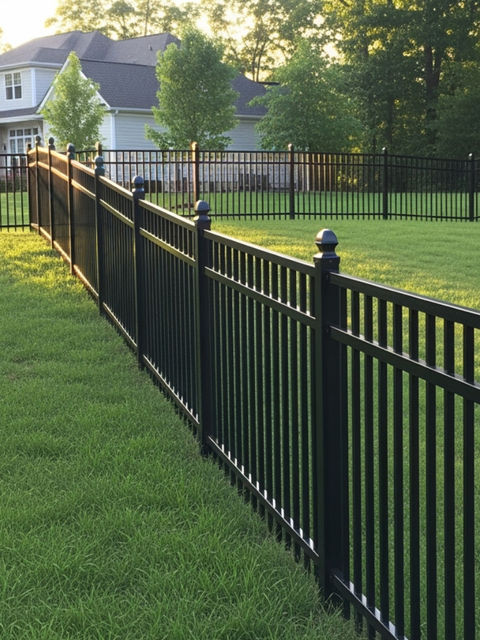
Racking is like having your fence give your yard a gentle hug – it follows every curve and slope with natural grace. This method allows the fence panels to angle with the ground while keeping the vertical pickets perfectly upright.
How racking works is actually quite ingenious. The horizontal rails of aluminum fence panels are designed to pivot at their connection points, letting them follow your slope’s contour. Meanwhile, the pickets stay vertical, creating that smooth, uninterrupted fence line that makes your property look professionally designed.
The real beauty of racking lies in its seamless appearance. Your fence will flow with your landscape instead of fighting against it. This creates those coveted small, consistent gaps underneath – perfect for keeping pets safely contained while maintaining that clean look.
Panel flexibility is where aluminum fencing really shines. The panels are engineered with screwed connections that allow for articulation at the joints. Many manufacturers even create “overpunched” holes where pickets pass through rails, giving you greater angling capability without any binding or stress on the materials.
When it comes to racking capabilities, you’ve got options for almost any slope. Standard panels can typically handle a 6 to 12-inch rise over their length – some even manage up to 19 inches over a 6-foot span. For steeper challenges, double-punched panels can accommodate rises up to 20 inches, while heavy rackable panels are the champions, handling an impressive 36-inch rise per panel.
This flexibility means we can create that flowing fence line even on surprisingly steep terrain. You can find more info about aluminum fencing options to explore what works best for your specific slope.
Stepping: A Classic Approach for Steep Slopes and Specific Styles
Sometimes your yard calls for a more structured approach, and that’s where stepping creates its own kind of beauty. This method installs each panel horizontally, creating a clean tiered effect with level top rails that step down your slope like an neat staircase.
Stepping becomes the hero when your slope is too steep for even the most flexible racking systems – typically when you’re looking at more than 12 inches of rise over a 6-foot run. It’s also the go-to choice for decorative panels featuring intricate designs like rings, scrollwork, or closely spaced pickets that simply can’t bend without losing their charm.
The structured appearance of stepping appeals to homeowners who love that architectural, formal look. Each panel maintains its perfect horizontal line, creating a strong visual statement that can beautifully complement certain landscaping designs or home styles.
Of course, stepping does create those triangular gaps underneath each panel – larger at the lower end of each section. But we’ve got this covered with several neat solutions. Retaining walls or strategic soil grading can close larger gaps, while landscaping solutions like dense shrubs, decorative rocks, or paving stones can fill these spaces naturally and beautifully. For maximum security or that ultra-clean finish, we can add custom bottom rails to completely eliminate any gaps.
You can explore more info about custom fencing to see how we handle these unique challenges.
Comparing Racking vs. Stepping
Feature | Racking Method | Stepping Method |
|---|---|---|
Best For | Gentle to moderate slopes | Steep slopes, specific decorative styles |
Top Line | Follows the slope, continuous | Level, creates a stair-step look |
Ground Gap | Small, consistent gap | Large, triangular gaps |
Appearance | Smooth, flowing | Structured, tiered |
Post Type | Standard line posts | May require longer end posts |
The truth is, both methods create beautiful results when properly executed. Your choice depends on working with your yard’s unique personality and your vision for the perfect fence.
The Professional Process: How to Install Aluminum Fence on a Slope
Installing an aluminum fence on a slope isn’t just about digging holes and setting posts; it’s a craft that combines meticulous planning with skilled execution. This is where all that careful thought comes to life, demanding precision, hands-on experience, and just the right tools. While the basic principles are easy to grasp, the real magic of a lasting, beautiful fence on uneven ground comes from a professional touch.

Setting the Foundation: Post Installation on Uneven Terrain
The true strength of any fence comes from its posts, and on a slope, this is even more critical. At PRO Fence Co. Wilmington, our process ensures every post is anchored with maximum stability, ready to stand strong for years.
First, we arrive fully equipped! Our essential tools include everything from powerful post hole diggers (both manual and motorized) to sensitive levels that ensure every post is perfectly straight. We also use string lines for precise alignment, tape measures, and of course, all the necessary materials: durable aluminum fence posts, panels, gates, and the right hardware. For that rock-solid base, we rely on high-quality concrete mix, often layering in gravel for excellent drainage.
When it comes to digging the post holes, especially on sloped ground, we go deeper than usual. While a flat yard might call for holes 24-30 inches deep, for slopes, we aim for a minimum of 30 inches deep, often going even further. This extra depth is our secret weapon against potential soil movement and erosion, making sure your posts are anchored firmly, even considering the local frost line.
At the very bottom of each post hole, we add a generous 6-12 inches of gravel. Think of it as a built-in drainage system! This permeable layer stops water from pooling around the post’s base. That’s super important, as standing water can lead to frost heave in our colder Middlesex and Essex Counties winters or simply weaken the concrete over time.
Then, we set each post in concrete, creating an unyielding foundation. We use a fast-setting mix that typically starts to firm up in 20-40 minutes, but we always allow it to cure fully – usually at least 24 hours – before we even think about attaching panels or gates. This curing time is absolutely vital for achieving peak strength and durability.
Even on a slope, every single post must be perfectly plumb, meaning perfectly straight up and down. We use professional levels to guarantee this precision. It’s not just about looking good; a plumb post is crucial for the fence’s structural integrity and ensures that panels attach correctly, keeping your fence line true and beautiful.
Remember how we talked about soil composition and ground conditions during planning? That knowledge comes into play here too. In loose, sandy soils, we might opt for a wider post hole diameter to create a larger concrete footing, boosting stability. If we hit rocky terrain, we come prepared with specialized digging equipment to ensure we reach the required depth without compromising the post’s foundation. Our goal is always to build a foundation that laughs in the face of time and challenging terrain.
Panel and Gate Installation on a Grade
Once those posts are securely set and cured, this is where the real change begins! We carefully attach the panels and gates, adapting them perfectly to the unique grade of your yard. This is a key part of how to install aluminum fence on a slope.
When attaching racked panels, it’s almost like watching the fence gracefully dance with the landscape. The aluminum panels are specially designed to pivot right at the post connections. We gently position each panel, allowing it to angle naturally with the slope, then securely fasten it to the pre-routed holes in the posts using manufacturer-specified screws. The result? That beautiful, seamless flow we talked about.
For securing stepped panels, the process is a bit different, demanding precision and a keen eye. Each panel is installed perfectly horizontally. This often means using specialized mounts (like rail ends) to attach panels to blank (non-routed) posts at varying heights, creating that distinctive, clean stair-step look. We take meticulous measurements and make precise cuts to ensure every stepped section is uniform and visually pleasing.
You might notice we use different types of posts for certain situations. In stepped installations, especially on steeper grades, we might use end posts rather than standard line posts at the “steps.” This allows us to attach panels at different heights more securely and creates a much cleaner transition between levels.
Gate post considerations on a slope deserve extra attention. The posts for your gate must be exceptionally strong and set even deeper than your regular line posts. Why? Because they bear the constant weight and movement of the gate itself. We ensure they are perfectly plumb and super stable before we even think about installing the gate hardware.
Finally, we carefully consider hinge and latch placement for gates on slopes to ensure smooth, unhindered operation. Hinges are typically installed about 6 inches from the top and bottom of the gate. We use only high-quality, adjustable hinges that can easily compensate for any slight variations in the ground, making sure your gate swings freely without dragging. Latches are installed to provide secure closure, keeping your property safe and sound, even on an incline.
Our unwavering attention to detail at every stage of the installation process ensures your aluminum fence isn’t just stunning, but also incredibly durable and fully functional on your sloped property. You can learn more info about our fence services here.
Finishing Touches and Long-Term Maintenance for a Sloped Fence
Once your beautiful aluminum fence stands proud on its sloped terrain, our job at PRO Fence Co. Wilmington isn’t quite done. We perform thorough final checks and offer practical advice on long-term care to ensure your investment serves you wonderfully for decades to come.
We carefully inspect every fastener and connection point – every screw, bolt, and attachment. We want to be sure everything is tight and secure. On a slope, your fence’s panels and posts are under constant, subtle stress from gravity and potential ground shifts, so rock-solid connections are absolutely paramount.
Over time, soil erosion can sometimes affect fence post stability, especially on slopes. We’ll chat about simple strategies to help prevent this, like smart landscaping, diverting water flow, or, if needed, reinforcing post bases with compacted dirt or gravel. Keeping an eye out for any signs of erosion is a smart habit to develop.
One of the many joys of cleaning aluminum fencing is how wonderfully low maintenance it is! It naturally resists rust, corrosion, and fading. For general upkeep, a quick rinse with a garden hose to wash away dirt and debris is usually all it takes. For tougher grime, a mild soap and water solution with a soft brush will do the trick. No painting, no staining, no complicated treatments needed – just simple care!
We also recommend periodic post stability checks. Especially after heavy rains or significant ground movement, take a moment to look for any signs of shifting, leaning, or wobbling. If you ever notice any issues, please know that our team is always ready to help with expert fence repair and maintenance.
And if you chose a stepped installation, we make sure any gap-filling solutions (like small retaining walls or strategic landscaping) are perfectly implemented, and we’ll discuss how to easily maintain them over the years. With PRO Fence Co. Wilmington, your sloped aluminum fence is truly built to last, offering minimal upkeep while providing maximum beauty and security.
Frequently Asked Questions about Sloped Fence Installations
When it comes to how to install aluminum fence on a slope, we hear the same thoughtful questions from homeowners again and again. These are the practical concerns that keep you up at night when you’re planning your fence project – and we’re here to put your mind at ease with clear, honest answers.
How much can a standard aluminum fence panel rack?
Here’s the good news: aluminum fence panels are surprisingly flexible when it comes to handling slopes. Most standard 6-foot aluminum fence panels can rack (or angle) to accommodate a slope of about 6 to 12 inches over the panel’s length. Think of it this way – if your yard drops a foot over a 6-foot stretch, a standard panel can likely handle it beautifully.
But what if your slope is more dramatic? That’s where the engineering really shines. Specially designed rackable panels are available that can handle rises of 20 inches per panel. For those truly challenging landscapes – the kind that make your neighbors wonder how you’ll ever fence them – heavy-rackable panels can accommodate rises of up to 36 inches per panel.
This means there’s virtually no residential slope that can’t be beautifully fenced with the right aluminum panel choice. It’s just a matter of matching the right panel type to your specific terrain.
What happens if my yard is too steep for racking?
Even with all those racking options, sometimes Mother Nature throws us a curveball. If your slope is too severe for even the most flexible panels, or if you’ve fallen in love with a decorative fence style that simply doesn’t rack well (those beautiful ornate designs sometimes need to stay rigid), don’t worry – we’ve got you covered.
The stepping method becomes your best friend in these situations. Instead of trying to force panels to angle beyond their limits, we install each panel perfectly horizontal and then “step” it down at each post. This creates a clean, tiered look that can handle even the steepest terrains with confidence.
Some homeowners actually prefer this structured appearance – it has an architectural quality that can be quite striking. The stepping method works beautifully with decorative panels that feature intricate scrollwork or closely-spaced pickets that would bind if forced to rack.
How are the gaps under a stepped fence handled?
Ah, the gap question – this is probably the most practical concern we hear about stepped installations. When panels are stepped, you do get those triangular gaps underneath each panel section. The good news? These gaps are completely manageable with some thoughtful planning.
For aesthetic solutions, we often recommend strategic landscaping. Dense shrubs planted along the fence line not only fill the gaps naturally but also create a beautiful, layered look. Decorative rocks or mulched garden beds can achieve a similar effect while requiring less maintenance.
When security is the priority – especially for pet owners or pool areas – we have more robust solutions. A small retaining wall can eliminate gaps entirely while adding visual interest to your landscape. We can also install custom bottom rails or additional pickets to completely close these spaces.
Sometimes the simplest solution is the best: grading the soil to match the fence line can minimize gaps significantly. It’s often the most cost-effective approach and creates the cleanest final appearance.
The key is discussing your specific needs with us during planning. Whether your priority is keeping your golden retriever contained or creating a seamless visual flow, we’ll recommend the gap solution that works best for your lifestyle and budget.
Secure Your Sloped Yard with Expert Fencing
There’s something truly satisfying about watching a beautiful aluminum fence take shape on challenging terrain. What once seemed like an impossible slope becomes the perfect backdrop for an neat fencing solution that works with your landscape, not against it.
Throughout this guide, we’ve explored how to install aluminum fence on a slope using two proven methods. Racking creates that gorgeous flowing look, where your fence gracefully follows every gentle curve and dip in your yard. It’s like watching your fence dance with the natural contours of your property. Stepping, meanwhile, brings structure and architectural appeal to steeper terrain, creating clean, tiered lines that add character and charm.
The real magic happens in the details. From measuring that critical rise-over-run ratio to setting posts deeper than usual, every step matters. We’ve seen how proper planning prevents headaches later, and why professional installation makes all the difference between a fence that merely stands and one that truly improves your property.
Here’s what we know works: gentle to moderate slopes shine with racking methods, while steep inclines and decorative styles often call for the stepping approach. Both methods have their place, and choosing the right one depends on your specific terrain and vision for your outdoor space.
At PRO Fence Co. Wilmington, we’ve made it our mission to turn challenging slopes into stunning fence installations. As a family-owned business serving Wilmington, Reading, North Andover, Salem, Wakefield, Andover, Woburn, Chelmsford, Lynn, Peabody, Beverly, and communities throughout Middlesex and Essex Counties, we bring both expertise and a personal touch to every project.
Your sloped yard isn’t a problem to solve—it’s an opportunity to create something beautiful. Whether you’re dealing with a gentle grade or a steep hillside, the right aluminum fencing solution is out there, and we’re here to help you find it. Learn more about our aluminum fencing solutions and find how PRO Fence Co. Wilmington can transform your unique landscape into the perfect outdoor sanctuary.


Comments